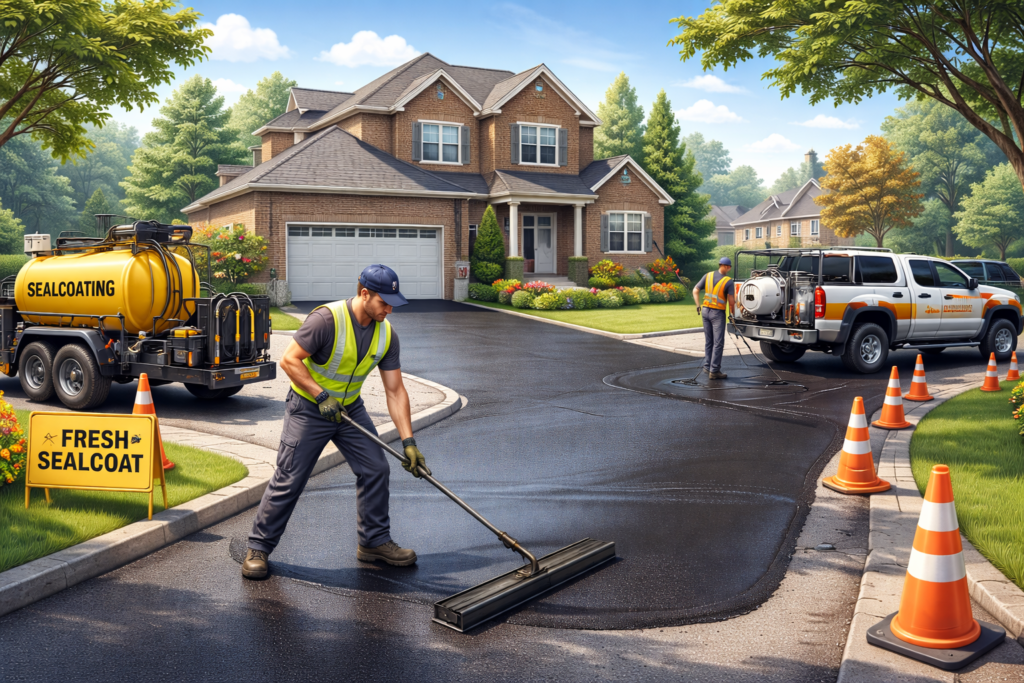
Sylvan Park’s tree-lined streets, charming bungalows, and walkable neighborhood character make it one of Nashville’s most sought-after residential communities. This historic West Nashville enclave, with its proximity to Charlotte Avenue’s thriving corridor and easy access to downtown, represents the ideal blend of urban convenience and neighborhood charm. For property owners throughout this desirable area, maintaining quality driveways and parking surfaces requires more than reactive repairs—it demands proactive protection through professional sealcoating that preserves pavement investments while maintaining the well-kept appearance that defines Sylvan Park’s distinctive appeal.
Quality sealcoating represents strategic preventive maintenance extending asphalt life, protecting against Tennessee’s weather extremes, and demonstrating the property care standards that keep Sylvan Park property values strong. Whether you’re a homeowner maintaining a craftsman-era driveway, a landlord managing rental properties, or a business owner along Charlotte Avenue, understanding sealcoating benefits, application timing, and maintenance requirements helps protect your significant asphalt investment while contributing to the neighborhood quality everyone values.
Sylvan Park’s Unique Pavement Environment
The neighborhood’s mature landscaping creates the canopy and character residents treasure while presenting specific maintenance challenges for asphalt surfaces. Established trees provide cooling shade beneficial for pavement longevity, but their extensive root systems gradually expand beneath driveways creating upward pressure that cracks and lifts asphalt. Falling leaves, seed pods, and organic debris accumulate on surfaces retaining moisture that accelerates deterioration. Professional sealcoating provides essential protection against these moisture and organic threats characteristic of established neighborhoods.
Many Sylvan Park properties feature original driveways installed during the neighborhood’s early to mid-20th century development. These aging installations often used construction standards and materials differing from modern practices—thinner asphalt sections, minimal base preparation, and binders less resistant to oxidation. As these driveways approach or exceed their design life, strategic sealcoating maintenance becomes crucial for maximizing remaining service years while homeowners plan for eventual replacement rather than facing emergency reconstruction.
Tennessee’s dramatic seasonal weather patterns test pavement durability through freeze-thaw cycles, intense summer heat, and heavy precipitation events. Winter temperatures dipping below freezing create expansion-contraction stress that cracks brittle asphalt. Spring thunderstorms deliver concentrated rainfall testing drainage systems and infiltrating surface imperfections. Summer’s prolonged heat and UV exposure accelerate oxidation—the chemical breakdown causing asphalt to age prematurely. Sealcoating provides comprehensive protection against this full spectrum of climatic challenges.
Charlotte Avenue’s commercial corridor experiences different pavement stress than residential streets. Business parking areas handle higher traffic volumes with constant entering, exiting, and maneuvering in confined spaces. Delivery vehicles and customer turnover create concentrated wear patterns. These commercial properties require more frequent protective maintenance than residential driveways, with sealcoating schedules reflecting actual usage intensity rather than generic time-based intervals.
Comprehensive Sealcoating Protection Benefits
Sealcoating creates protective barriers shielding asphalt from oxidation—the primary deterioration mechanism aging and weakening pavement. Ultraviolet radiation from Tennessee’s abundant sunshine breaks down chemical bonds in asphalt binder, causing surfaces to fade from rich black to dull gray while becoming increasingly brittle and crack-prone. Sealcoating blocks UV penetration, maintaining asphalt flexibility and dark appearance while preventing oxidative damage. Regular sealcoating can extend pavement life 50-100% beyond unsealed surfaces.
Water infiltration protection ranks among sealcoating’s most critical benefits, preventing moisture from destroying pavement from beneath the surface. Water penetrating through cracks and porous areas saturates base materials, reducing their load-bearing capacity and creating conditions for freeze-thaw damage during Nashville’s winter cold snaps. This subsurface deterioration progresses invisibly until sudden surface failures reveal extensive damage requiring costly reconstruction. Sealcoating fills minor surface voids while creating water-resistant barriers preventing infiltration.
Chemical resistance protects asphalt from automotive fluids that dissolve binder and create pavement softening. Gasoline, motor oil, brake fluid, and other petroleum products chemically attack asphalt, creating soft spots where aggregate loosens under traffic. Even small, frequent spills from daily vehicle use accumulate significant damage over years. Sealcoating provides chemical-resistant surfaces that facilitate cleanup while preventing penetration that causes permanent pavement degradation.
Aesthetic enhancement delivers immediate visual impact through sealcoating’s rich black appearance. Fresh sealcoating transforms faded, gray pavement into surfaces appearing newly installed—all at fractions of replacement costs. This dramatic improvement affects property values, neighborhood perceptions, and curb appeal. For Sylvan Park homeowners where property presentation directly influences values and marketability, sealcoating represents one of the highest-return maintenance investments available.
Professional Application Process and Standards
Quality sealcoating begins with meticulous surface preparation determining application success and longevity. Professional contractors thoroughly clean pavement using power washing equipment or industrial blowers removing all dirt, debris, vegetation, and loose material. They repair significant cracks and potholes ensuring smooth, structurally sound surfaces for sealer adhesion. Oil-contaminated spots receive specialized primer treatment allowing sealer to bond over areas that would otherwise repel coating. This comprehensive preparation creates conditions for optimal sealer performance.
Crack sealing precedes sealcoating application, addressing openings that allow destructive water infiltration. Professional crack repair uses hot-applied rubberized sealants that remain flexible through temperature fluctuations, expanding and contracting with pavement movement without losing adhesion. Contractors thoroughly clean cracks removing all vegetation, soil, and debris, then fill completely creating watertight seals throughout their depth. This critical preparation step prevents premature sealcoating failure that occurs when moisture infiltrates through unsealed cracks.
Sealer application requires favorable weather conditions and skilled technique ensuring uniform coverage and proper film thickness. Professional contractors apply coal tar emulsion or asphalt emulsion sealers using spray equipment for efficient coverage on larger areas or squeegee application for smaller driveways and detail work. Two thin coats typically outperform single heavy applications—allowing proper drying between coats while building adequate protective thickness without the pooling and streaking that compromise appearance and performance.
Detail work and finishing demonstrate installation quality and professionalism. Contractors carefully edge along garage doors, walkways, landscaping, and property boundaries creating clean, straight lines. They protect adjacent surfaces including concrete sidewalks, garage floors, foundation walls, and plantings from overspray or spills. For properties requiring it, they refresh driveway edges or add decorative striping after sealcoating cures. These finishing touches reflect the craftsmanship Sylvan Park property owners expect and deserve.
Why Sylvan Park Properties Need Neighborhood Expertise
Understanding Sylvan Park’s property characteristics allows experienced contractors to deliver services matching community expectations and standards. The predominance of historic homes with narrow driveways, limited turning radii, and proximity to structures requires careful equipment selection and operation. Contractors familiar with the neighborhood understand these access constraints, mature tree considerations, and the architectural sensitivity important to residents who value historic character.
An established Sealcoating Contractor Sylvan Park brings proven relationships with quality material suppliers ensuring access to appropriate sealers for Tennessee’s climate. These supplier connections facilitate competitive pricing, reliable product availability maintaining schedules, and access to specialty materials addressing unique situations. Local contractors maintain these advantageous relationships that distant operators cannot replicate.
Metropolitan Nashville’s regulations governing residential property maintenance require familiarity that experienced local contractors possess. Codes address stormwater management, environmental protection, and noise restrictions. Historic overlay districts may have additional guidelines affecting work methods or hours. Contractors experienced in Sylvan Park navigate these requirements efficiently, preventing delays and ensuring compliant installations without the complications that plague unfamiliar operators.
Community reputation profoundly matters for contractors whose completed work remains visible throughout neighborhoods where they regularly operate. Quality installations become ongoing advertisements while substandard work serves as cautionary examples affecting future opportunities. This visibility creates accountability incentivizing superior workmanship and customer service that national chains or transient operators don’t face—directly benefiting property owners through contractors’ commitment to maintaining excellent community standing.
Investment Analysis and Property Value Protection
Sealcoating costs typically range $0.15-0.30 per square foot depending on surface condition, required repairs, and sealer specifications. Sylvan Park’s typical residential driveway averaging 400-600 square feet costs approximately $60-180 for professional two-coat application including surface preparation and crack filling. This modest investment extends pavement life 3-5 years per application while dramatically improving appearance—representing exceptional value compared to alternative property improvements.
Preventive maintenance through regular sealcoating reduces total pavement ownership costs by 50% or more over complete lifecycle analysis. Unsealed asphalt in Tennessee’s climate typically requires replacement after 10-15 years. Properties maintaining consistent 2-3 year sealcoating schedules extend pavement life to 20-30 years before reconstruction becomes necessary. The cumulative cost of multiple sealcoating applications totals far less than premature replacement that neglected driveways require.
Property value enhancement justifies sealcoating investments beyond simple pavement protection. Well-maintained driveways significantly influence buyer perceptions and appraisal values. In Sylvan Park’s competitive real estate market where properties command premium prices, superior maintenance including fresh sealcoating supports values and accelerates sales. Real estate professionals consistently identify driveway condition among the most noticed exterior features affecting buyer interest and offer amounts.
Liability reduction through improved pavement condition protects homeowners from premises liability exposure. Cracked, deteriorating driveways create trip hazards and uneven surfaces that can cause injuries to family members, guests, or service providers. Regular sealcoating prevents deterioration creating these hazards while demonstrating proactive maintenance that helps defend against liability claims. This protection adds value beyond pavement preservation, particularly important as properties age and liability awareness increases.
Optimal Timing and Strategic Scheduling
Sealcoating timing balances weather requirements with homeowner convenience for best results. Applications require temperatures above 50°F during application and throughout 24-48 hour curing, with no rain forecast for 24 hours minimum. Nashville’s climate makes spring and fall optimal—moderate temperatures, lower humidity, and stable weather patterns. Summer applications work but extreme heat can complicate application, while winter’s cold prevents proper curing.
New asphalt requires 6-12 months curing before initial sealcoating, allowing volatile oils and solvents to evaporate and surfaces to oxidize slightly improving sealer adhesion. Premature sealcoating traps these volatiles creating bonding problems and surface defects. After initial curing completes, establish regular 2-3 year maintenance intervals maintaining continuous protection throughout pavement’s service life. Consistent schedules prove far more effective than sporadic applications responding only to obvious deterioration.
Residential scheduling accommodates homeowner preferences and household activities. Spring applications prepare driveways for summer outdoor activities and entertaining. Fall sealcoating protects pavement heading into winter while taking advantage of ideal weather conditions. Avoid scheduling during major holidays, family events, or periods requiring uninterrupted driveway access. Professional contractors work flexibly with homeowners developing convenient schedules ensuring adequate cure time before normal use resumes.
Multi-property owners and landlords benefit from programmatic scheduling spreading sealcoating across portfolios. Rather than attempting all properties simultaneously—creating budget spikes and management challenges—establish rotations where portions receive service annually. This approach smooths budgets, maintains consistent property appearance across holdings, and develops predictable contractor relationships delivering reliable quality. Portfolio scheduling also facilitates volume pricing reducing per-property costs.
Maintenance Best Practices Extending Sealcoating Life
Regular inspections identify developing problems before they compromise sealcoating protection. Walk your driveway quarterly checking for new cracks, oil stains, areas showing unusual wear, or drainage issues. Address problems promptly—crack sealing, stain removal, and drainage corrections prevent minor issues from becoming expensive failures. These brief inspections require minimal time but provide early warning preventing the accelerated deterioration that occurs when problems go unnoticed.
Routine cleaning extends sealcoating life while maintaining property appearance. Sweep or blow driveways weekly removing leaves, dirt, and debris. Power wash annually removing accumulated grime, tire marks, and biological growth. Clean automotive fluid spills immediately using absorbent materials and appropriate cleaners—petroleum products penetrate even through sealcoating if allowed to stand. Remove vegetation growing through cracks before roots expand damage requiring repair.
Drainage maintenance prevents water damage that destroys pavement regardless of sealcoating quality. Keep driveway edges clear of soil and mulch that blocks water flow. Maintain downspout extensions directing roof runoff away from pavement. Address any settling creating low spots where water ponds—standing water accelerates deterioration even through intact sealcoating. Proper drainage prevents most premature pavement failures independent of sealcoating schedules.
Winter care protects sealcoating during Nashville’s occasional snow and ice events. Use calcium chloride or magnesium chloride de-icers rather than sodium chloride (rock salt) which damages both asphalt and sealcoating. Apply sparingly—excess chemicals accelerate deterioration. Avoid metal snow shovels or sharp implements that gouge sealcoating—use plastic shovels or brooms for snow removal. These precautions preserve protection through winter weather that tests pavement durability.
Environmental Stewardship and Sustainable Choices
Sealer selection affects environmental impact with options balancing performance and ecological responsibility. Coal tar emulsion sealers provide superior durability and chemical resistance but contain polycyclic aromatic hydrocarbons (PAHs) raising environmental concerns about runoff impacts. Asphalt emulsion alternatives offer reduced environmental impact with performance adequate for most residential applications. Environmentally conscious Sylvan Park homeowners increasingly choose asphalt emulsions reflecting community values regarding sustainability.
Runoff management protects local water quality during and after application. Professional contractors prevent sealer from entering storm drains through careful application technique and temporary barriers when necessary. They ensure adequate curing before rainfall exposure preventing fresh material from washing into drainage systems. Properties near creeks, parks, or environmentally sensitive areas warrant extra precautions protecting these valued community resources.
Low-VOC (volatile organic compound) formulations reduce air emissions during application and curing periods. These advanced sealers meet increasingly stringent air quality standards while delivering effective pavement protection. They produce less odor benefiting both applicators and nearby residents during work. While potentially costing slightly more than traditional formulations, low-VOC products support environmental health valued throughout Nashville’s progressive neighborhoods.
Efficient material use minimizes waste and environmental impact. Professional contractors accurately calculate required quantities avoiding excess becoming waste. They maintain equipment properly preventing leaks or spills. Empty containers get recycled when programs exist. Application equipment gets cleaned responsibly preventing sealer from entering drainage systems or contaminating soil. These practices demonstrate environmental responsibility while controlling costs through efficient operations.
Selecting Qualified Sealcoating Contractors
Experience serving Sylvan Park properties indicates understanding of neighborhood-specific requirements and homeowner expectations. Request references from nearby properties, then actually contact homeowners asking about their experiences, work quality, communication, and overall satisfaction. Drive by referenced properties observing work quality firsthand when possible. Multiple positive experiences from neighborhood properties suggest consistent capability and local familiarity valuable for successful outcomes.
Professional credentials demonstrate competence and industry commitment. Training certifications from organizations like the Pavement Maintenance Association indicate formal education in best practices. Manufacturer certifications for specific sealer products show expertise with those materials and application techniques. Proper business licensing and contractor registrations confirm legitimate operations. While credentials don’t guarantee quality, they indicate professionalism exceeding bare minimum requirements.
Insurance coverage protects homeowners from liability during sealcoating work. Verify contractors carry comprehensive general liability insurance covering property damage and bodily injury from operations. Workers compensation insurance protects against liability for worker injuries on your property. Request insurance certificates and verify coverage directly with carriers—fraudulent documentation occasionally appears making independent verification prudent before authorizing work.
Detailed written proposals protect both parties through clear documentation of scope and expectations. Proposals should specify surface preparation methods, crack repair extent, sealer type and coverage rate, number of coats, curing requirements, and timeline. Include what’s specifically excluded to prevent misunderstandings. Vague estimates hide assumptions creating dispute opportunities—comprehensive specifications establish shared understanding preventing the conflicts that create dissatisfaction despite quality work.
Your Sylvan Park property deserves sealcoating services executed with the expertise and attention to detail that protects your pavement investment while maintaining the quality standards this distinctive neighborhood expects.
Frequently Asked Questions
When is the best time of year for sealcoating in Nashville? Spring (April-May) and fall (September-October) provide ideal conditions with moderate temperatures, lower humidity, and stable weather. Summer works but extreme heat complicates application. Winter’s cold prevents proper curing. Schedule when temperatures will remain above 50°F for 48 hours with no rain forecast.
How long must I stay off my driveway after sealcoating? Light foot traffic is typically safe after 4-6 hours. Vehicle traffic should wait 24-48 hours depending on weather conditions, temperature, and sealer type. Contractors provide specific guidance based on actual conditions. Premature use risks tracking and surface damage to uncured sealcoating.
Can sealcoating fix cracks in my driveway? Sealcoating fills hairline cracks and minor surface imperfections but doesn’t repair significant cracking. Cracks wider than 1/4 inch require proper crack sealing before sealcoating. Structural damage and potholes need repair prior to application. Quality work includes necessary repairs ensuring comprehensive protection.
How often should residential driveways be sealcoated? Most residential driveways benefit from sealcoating every 2-3 years. Heavily used driveways or those in full sun exposure may need more frequent application. Lightly used driveways in shaded locations might extend to 3-4 years. Actual timing depends on observed condition rather than rigid schedules.
What’s the difference between coal tar and asphalt emulsion sealers? Coal tar provides superior durability, chemical resistance, and longevity but raises environmental concerns due to PAH content. Asphalt emulsion offers environmentally preferable alternatives with acceptable performance for residential use. Choice depends on priorities balancing performance, environmental impact, and cost considerations.