How to Buy Solar Products Online in Pakistan Without Getting Burned
The rush to solar has created a crowded marketplace, and not every listing deserves your money. If you plan to buy solar products online in Pakistan this year, the difference between a great purchase and an expensive regret comes down to knowing what to verify before you check out. This guide is a buyer’s playbook, built from real complaints and real wins, so your panels, inverter, and batteries actually last.
Online buying is convenient and often cheaper than a showroom. It also hides the two things that ruin solar purchases: fake datasheets and mismatched components. Let us fix both.
Why More Pakistanis Buy Solar Products Online in 2026
Showrooms carry limited stock and mark up heavily to cover rent. Ordering online opens the full catalogue, transparent pricing, and doorstep delivery to smaller cities that never had a solar dealer nearby.
The shift is part of a broader energy transition. The International Energy Agency reports that solar has become the fastest-growing source of new electricity generation worldwide, and you can follow that trajectory in the IEA renewables market analysis. Pakistan is riding the same wave, which is why the online market has matured quickly.
When you buy solar products online from a reputable store, you also gain something a roadside shop rarely offers: documented warranties and traceable serial numbers.
The Five Checks Before You Add to Cart
Run every product through these gates. Skipping even one is how people end up with dead batteries in eighteen months.
- Verify the datasheet. A genuine panel or inverter listing includes wattage, efficiency, temperature coefficient, and a real model number you can search on the manufacturer’s site.
- Confirm the warranty terms. Panels should carry a product warranty plus a longer performance warranty. Inverters typically offer five to ten years.
- Check compatibility. Your inverter, panels, and batteries must speak the same voltage language. Mismatched components underperform or fail.
- Read return and support policy. Solar hardware is heavy and delicate. Know who pays for a return before you buy.
- Ask about after-sales. Reliable stores connect you with installation and troubleshooting help, not just a shipping label.
Panels, Inverters, and Batteries: What to Prioritise
Each component category rewards a different kind of scrutiny. The table below summarises what to weigh most when comparing listings.
| Component | Top Priority | Watch Out For | Typical Warranty |
|---|---|---|---|
| Solar Panels | Efficiency and tier-1 cell quality | Refurbished or B-grade cells sold as new | 10–12 yr product, 25 yr performance |
| Inverter | Type (hybrid vs on-grid) and surge rating | Underrated capacity for your load | 5–10 years |
| Battery | Chemistry and cycle life | Overstated Ah ratings | 3–8 years depending on type |
Which Battery Chemistry Wins for Pakistani Homes?
Lithium and tubular lead-acid dominate the market. Lithium costs more upfront but delivers far more cycles, faster charging, and better depth of discharge. Tubular batteries remain popular for tighter budgets. When you compare solar batteries in Pakistan, look past the sticker price to the cost per usable cycle. That single metric reveals the true value.
Original Insight: The Bundle Trap
Here is a pattern worth flagging. Sellers often push “complete solar packages” at attractive prices. Bundles can be genuinely economical, but some hide a weak link, usually the battery or the mounting kit, to keep the headline price low.
My rule when buying online is to price the bundle, then price each component separately from the same store. If the bundle saves money and every part still passes the five checks above, take it. If the savings vanish once you upgrade the weak component, buy à la carte. This ten-minute exercise routinely protects buyers from a costly compromise they would not notice until year two.
Delivery, Installation, and Documentation
Buying is only half the journey. Protect yourself after the parcel arrives.
- Inspect panels for micro-cracks and shipping damage before signing.
- Photograph serial numbers and store them with your invoice for warranty claims.
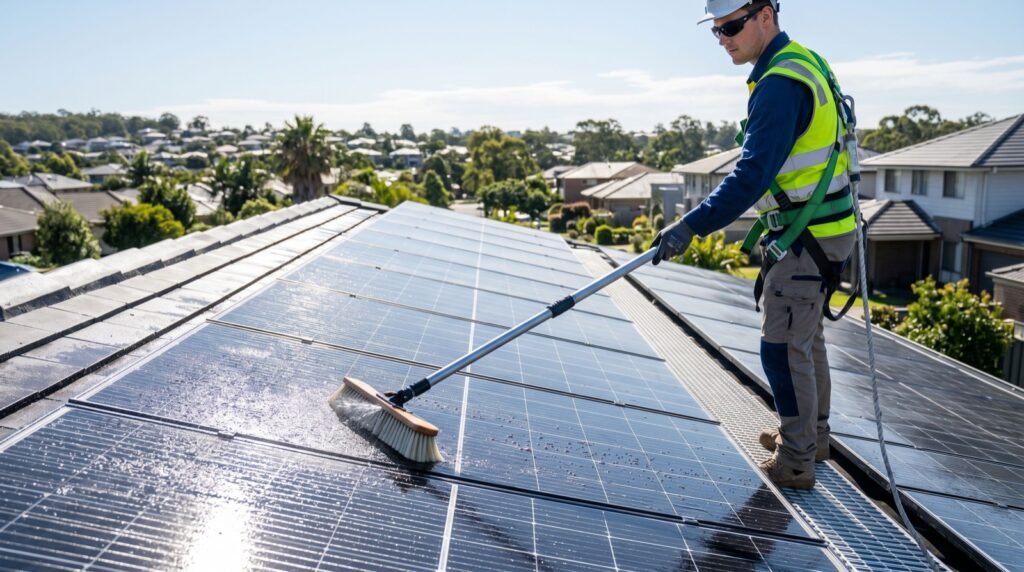
- Use a certified installer rather than an untrained relative to preserve warranty validity.
- Keep all packaging until commissioning confirms every component works.
For net metering paperwork and installation, partnering with quality service providers turns a box of components into a working system that meets grid standards.
Reading Reviews and Ratings the Smart Way
Online reviews help, but only if you read them critically. Solar hardware failures often surface after a year or two, so a listing with only recent five-star ratings tells you little about durability. Look for depth instead of volume.
Prioritise reviews that mention specific outcomes: how the battery held up through a full summer, whether the inverter survived grid surges, and how the seller responded to a warranty claim. A store that resolves problems gracefully is worth more than one with a slightly cheaper price and no track record of support. When two listings look identical on paper, the after-sales reputation should break the tie every time.
Budgeting Beyond the Sticker Price
A common mistake is budgeting only for the visible components. A complete online solar purchase includes several supporting items that quietly add up, and forgetting them leads to a half-finished system sitting in boxes.
- Mounting structure rated for your roof and local wind conditions.
- DC and AC cabling of the correct gauge for your run lengths.
- Protection devices such as breakers, fuses, and surge arrestors.
- Earthing and lightning protection for safety and warranty compliance.
Factor these in before you decide your total budget. A store that lists them clearly, or bundles them transparently, saves you a scramble later. Skipping protection devices to save a little money is a false economy that risks both your equipment and your family’s safety.
Frequently Asked Questions
Is it safe to buy solar products online in Pakistan?
Yes, provided you buy from an established store with verifiable datasheets, clear warranties, and traceable serial numbers. Avoid listings that hide model numbers or refuse returns, and always confirm component compatibility before ordering.
How do I know if a solar panel is genuine?
Match the model number on the listing against the manufacturer’s official catalogue, confirm the efficiency and temperature coefficient on the datasheet, and inspect the physical panel and serial label on delivery. Genuine panels ship with documented performance warranties.
Which is better for storage, lithium or tubular batteries?
Lithium wins on cycle life, charging speed, and usable capacity, making it cheaper per cycle over time. Tubular lead-acid suits smaller budgets and lighter backup needs. Choose based on your daily backup hours and how long you plan to keep the system.
Do online solar purchases include installation?
Not always. Some stores bundle installation or connect you with certified partners, while others sell hardware only. Confirm before checkout, since professional installation protects both safety and warranty coverage.
Conclusion
You can absolutely buy solar products online in Pakistan and come out ahead in 2026, as long as you shop with a checklist instead of a hunch. Verify datasheets, match your components, weigh battery chemistry by cost per cycle, and lean on trusted installers for the final mile. Do the homework once, and your solar setup rewards you quietly for decades. Ready to start? Compare verified listings and place your order with confidence today.